Electronic technology is advancing rapidly, and the USB connector interface widely used in electronic computers and mobile phones is naturally an exception.
Before the emergence of USB interfaces, there were various interfaces on computers. Such as previous serial port mice, PS/2 interface keyboards, parallel ports for connecting serial gaming devices, and pin printers.
The characteristics of these interfaces are not only large block size, but also slow transmission speed.
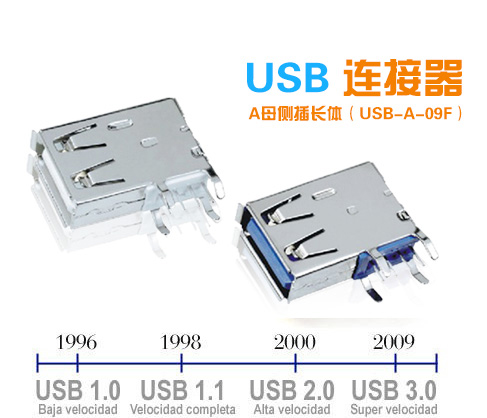
With the advancement of technology, the first generation USB 1.0 connector was introduced in 1996. In the early days, due to insufficient support for Windows systems. Lack of support for software and hardware devices, although early computers were also equipped with USB interfaces, due to poor compatibility, USB devices were scarce and mostly unused.
Until 1998, two years later. With the emergence of USB 1.1 version, Microsoft began to build a support module for USB interface in Windows 98 system, which supports simultaneous connection of multiple devices and has true "plug and play" features. The speed has also reached 12Mbps, which is about 100 times faster than the standard serial transmission rate. Since then, USB devices have been widely favored by peripheral manufacturers. USB interface devices have gradually entered thousands of households and are gradually being accepted and well-known by people.
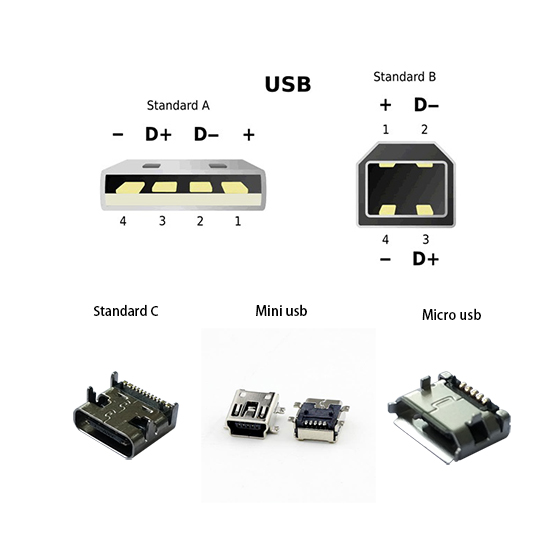
With the footsteps of humanity entering the new century, USB devices have also entered the era of USB 2.0. USB devices not only have significantly improved transmission rates, but also have become more diverse in interface forms. Such as the common A-type port, the B-type port used in printing devices, the new C-type interface used in mobile devices, such as the type-c connector commonly seen in new smartphone devices today, in addition to Micro USB interface, Mini USB interface, etc. Thus, USB truly entered a glorious period of rapid development. USB connectors have the following characteristics:
1. Supports hot swapping. In this way, users can directly plug these USB cable devices into the USB interface when using external devices without having to restart the computer.
2. Easy to carry. USB devices are mostly known for being "small, light, and thin". Such as commonly used USB devices.
3. Unified standards. Previously, there were various interfaces on computers, but with the emergence of USB connector interfaces, various devices that were not originally standardized, such as PS/Q mice, keyboards, etc., now use a unified USB interface.
4. Can connect multiple devices. At present, a personal computer often has multiple USB ports, which can connect several USB devices simultaneously. Greatly improving the convenience of device usage.
After the emergence of the USB interface, USB drives replaced traditional 1.44-inch floppy disks and retired optical disc drives with glory. The editor has been buying this laptop for four or five years, and the number of times the optical drive has been used is also very limited. Originally, when the computer broke down, reinstalling the system optical drive was an essential part of the device. Now, a small USB bootable drive can handle everything, and it's even faster and more user-friendly.
Nowadays, USB devices have not only entered a glorious era, but also become popular, such as Wi Fi adapters, wireless mice, keyboards, etc., making our computers more convenient to use, and the data transfer rate is higher. The old-fashioned interfaces on desktop computers and laptops are also gradually being phased out. The USB interface is profoundly affecting our lives and making them increasingly convenient.